Trading Journal
Finance
Trading
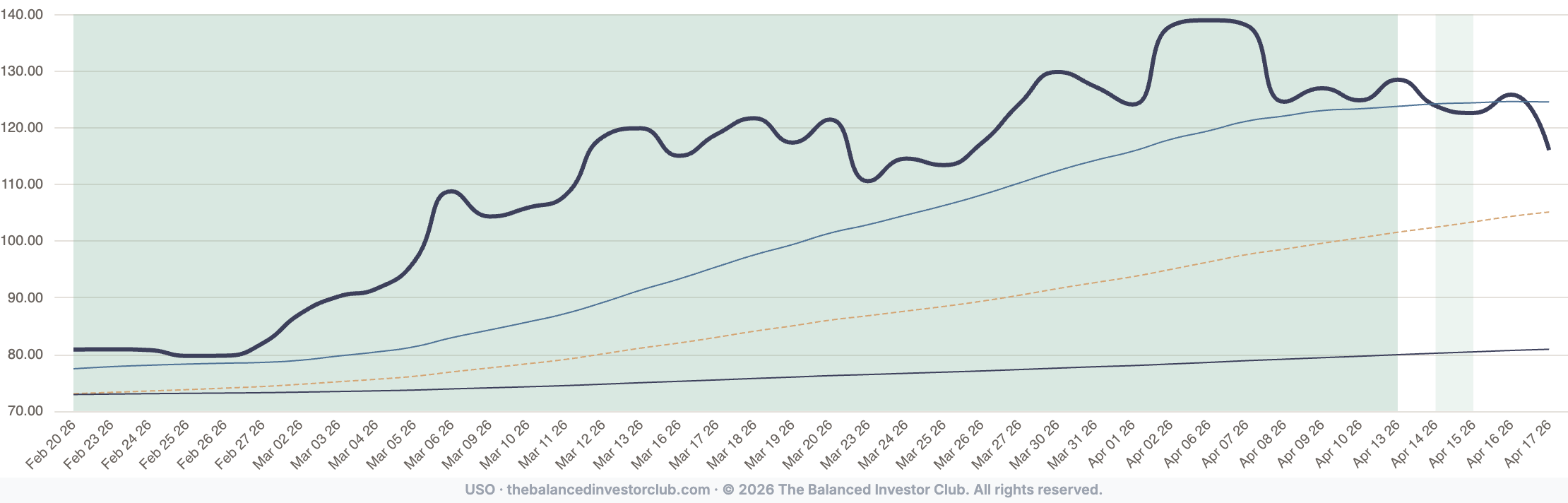

Two of the loudest market shocks of the past year and change happened twelve months apart. Liberation Day in April 2025. The closure of the Strait of Hormuz in March 2026. Different instruments, different catalysts. Same chain of reactions for investors.
I run a research project at The Balanced Investor Club that maps where retail capital actually flows. Looking back at both shocks, the same observation kept surfacing: the price action that preceded each event was publicly available, weeks before either headline broke.
The catalyst is unpredictable. The price action that precedes it is not. Two different categories of information.
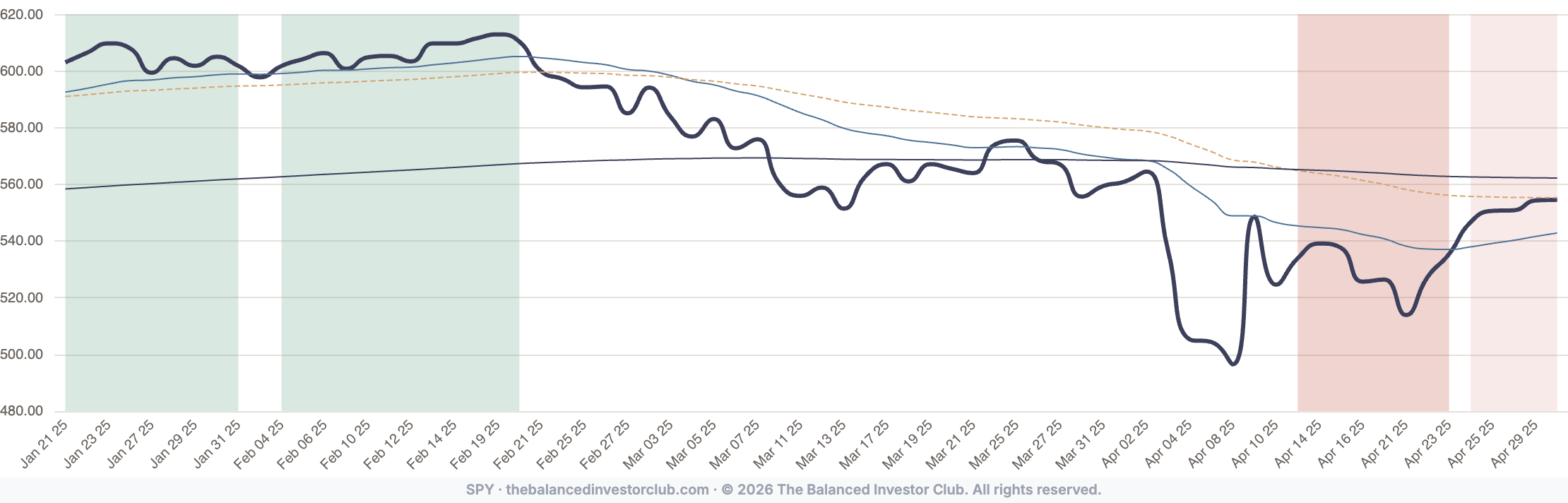
By the time the tariff announcement landed, the S&P 500 had been declining for nearly six weeks. A market trending lower into a known policy date is a recognisable setup.
When the announcement landed, SPY dropped roughly 12% in five sessions. April 7 marked the low. April 9 closed +9.5% after the 90-day pause.
Two things were openly visible before any of that. First, the regime: SPY had been making lower lows for over a month. Second, the historical context: drops of similar magnitude have occurred multiple times in SPY's history — 2008, 2018, 2020, 2022.
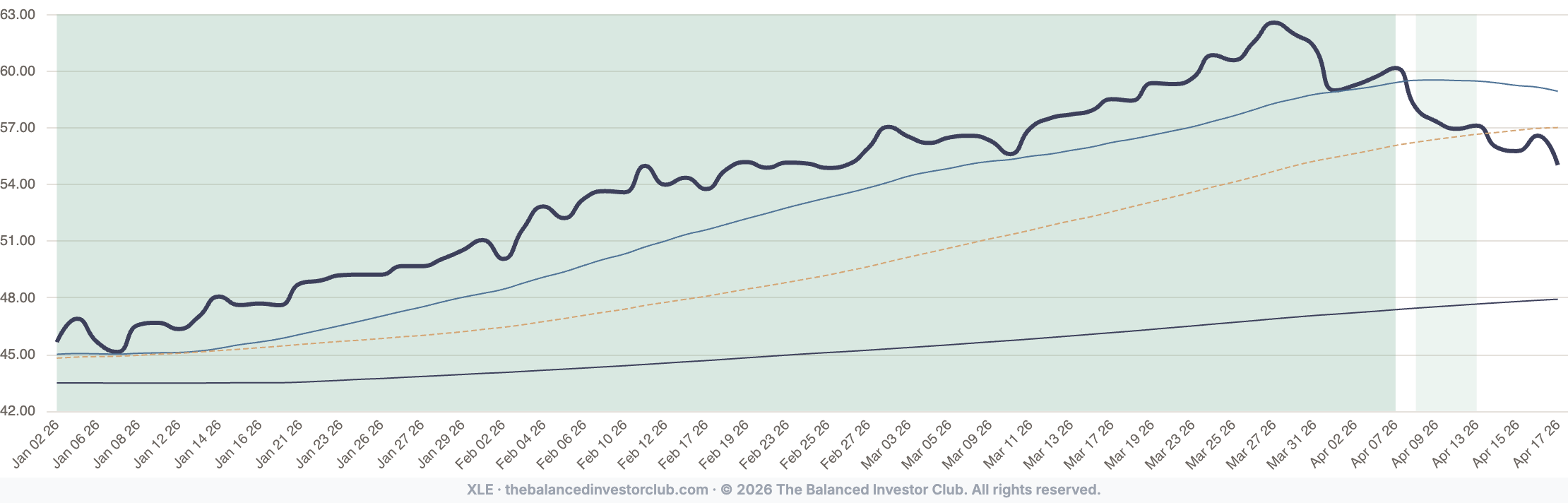
Oil markets had been firming on escalating regional tensions throughout February 2026. Energy equities were outperforming broad-market indices for weeks before the closure.
When strikes landed on February 28, Brent jumped from $71 to $77 in two sessions. After Iran closed the Strait, oil ran past $120 within four weeks.
Two things were openly visible. First, the regime: oil firming on geopolitical tension was visible six weeks before March 4. Second, the historical context: moves of similar magnitude have occurred during prior supply-disruption episodes — 1973, 1979, 1990, 2022.
Whether upwards or downwards, the market moves. As JP Morgan is said to have answered — "It will fluctuate."
The shocks change shape. Tariffs, blockades, central banks. The reaction inside investors does not. Headlines arrive, panic arrives, regret arrives. Same five days, same delayed return, same Mind the Gap that Morningstar measures every year.
Between data that is publicly available before an event, and the headlines that follow. Three practices operate on the first kind of information.
The regime is what an instrument has been doing for weeks, distinct from what it does today. Neither SPY in March 2025 nor oil in February 2026 required predicting the catalyst. Both required reading what was already on the chart.
The skill is observation, not prediction. And that skill is learnable.
Every instrument has a typical range. SPY's daily move sits around 1%. A 12% drop over five sessions is large, and recognisable across SPY's history. Oil moves more — a +50% quarter has historical precedent in supply-disruption regimes.
Knowing the typical range turns a "shock" into a "wide swing." The math is the same. The framing isn't.
A thesis is the reason a position exists. A trade is what happens to it. When April 7 arrives or March 4 lands, every drawdown reads as new evidence — unless there is a prior thesis to compare against.
Brett Steenbarger has spent decades arguing the same point: the practice of declaring a thesis before a position, with conditions that would invalidate it, produces a record. The record produces comparison. Comparison is what allows a known check, not an emotional one.
The next disruption won't be Liberation Day II or another Hormuz blockade. But the next disruption will arrive. History doesn't repeat. It rhymes.
The investors who navigate it with more clarity won't be the ones who guessed the headline. They'll be the ones who read what was already on the chart.
If any of this resonated, I'd love to hear from you
15 min directly with me, 1:1. → Meet me. No pitch. [Link here]
Educational content — Not investment advice. The Balanced Investor Club provides tools and information for educational purposes only. Nothing on this site constitutes financial, investment, or trading advice, nor a recommendation to buy or sell any security. Past performance does not guarantee future results. Your decisions are your own. Read our full disclaimer.